
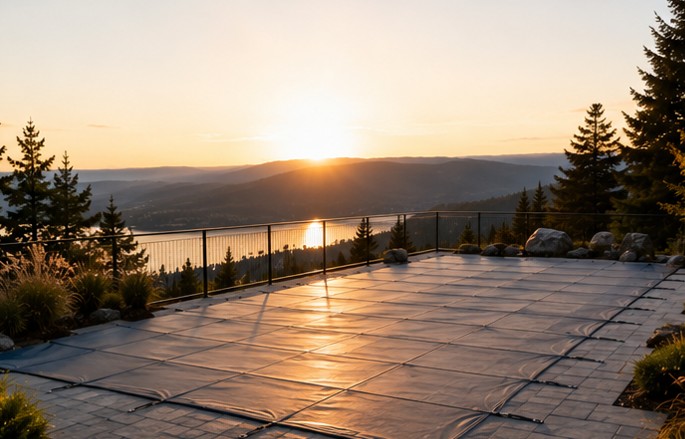
Pool owners in Kelowna and Calgary should generally close their pools after the water has cooled to around 15°C (60°F) or below and regular swimming has ended, but before sustained freezing temperatures put plumbing and equipment at risk. The right time depends more on water temperature and the weather forecast than a specific date on the calendar.
Closing too early while the water is still warm can encourage algae growth beneath the cover. Waiting too long can leave plumbing lines, pumps, filters and heaters vulnerable to freezing. For homeowners in both the Central Okanagan and Calgary region, the goal is to choose a cool-weather window that leaves enough time to winterize the pool properly.
What Is the Best Temperature for Closing a Pool?
A good guideline is to wait until your pool water is consistently below about 15°C (60°F).
Cooler water slows algae and microorganism activity, which can help the water remain in better condition while the pool is covered. It can also help the sanitizer used during closing last longer than it would in warm water.
The calendar alone shouldn’t determine your closing date. Fall weather can vary considerably from year to year, and Calgary and Kelowna do not always cool down at the same rate.
Watch both the pool water temperature and overnight forecast. You want the water cool, but you also want enough time to complete the closing before a significant freeze.
Why You Shouldn’t Close Your Pool Too Early
Warm pool water can remain biologically active even when nobody is swimming.
If a pool is covered while the water is still warm, algae can continue to grow and sanitizer can be consumed more quickly. By spring, homeowners may uncover cloudy, discoloured or algae-affected water that requires additional cleanup.
Waiting until the water has cooled helps reduce that risk.
This doesn’t mean waiting for winter to arrive. The ideal window is after the water has cooled but while conditions are still suitable for properly preparing the pool and equipment.
What Happens If You Wait Too Long?
The concern with a late closing is no longer algae it is freezing water.
Water expands when it freezes. If it remains inside vulnerable plumbing, fittings or pool equipment during cold weather, that expansion can potentially cause cracks or other damage.
A proper winterization may include clearing water from plumbing lines, installing appropriate winter plugs and draining or preparing pumps, filters and heaters according to the equipment requirements.
This is particularly important in Calgary, where rapid fall temperature changes can occur, but Kelowna pool owners also need to be prepared for freezing conditions as the Okanagan moves into late fall and winter.
Rather than relying on the date you closed last year, check current conditions each fall.
Should You Test Your Pool Water Before Closing It?
Yes. Pool water should be tested and balanced before the winter cover goes on.
Clear water is not necessarily balanced water. Testing can identify chemistry that needs adjusting before the pool sits unused for several months.
Depending on your pool, testing may include:
- Free chlorine
- pH
- Total alkalinity
- Calcium hardness
- Cyanuric acid or stabilizer
- Salt level for saltwater pools
- Other tests based on the water and pool system
Properly balanced water can help protect pool surfaces and reduce problems such as staining, scale and poor water quality during the off-season.
Homeowners can bring a water sample to Trevi Pools & Spas in Kelowna or Calgary for testing before closing. The results can help determine what, if anything, should be adjusted before winterization.
What Are the Main Steps for Closing a Pool for Winter?
The exact closing procedure depends on whether the pool is in-ground or above-ground and on its plumbing, equipment and winter cover.
A typical closing includes:
- Clean the pool. Remove leaves and debris and brush or vacuum the pool as needed.
- Test and balance the water. Correct water chemistry before the pool is covered.
- Prepare the water for winter. Add appropriate winterizing products based on the pool and water conditions.
- Adjust the water level if necessary. The correct level depends on the pool, skimmer, cover and winterization method.
- Winterize the plumbing. Remove water from vulnerable lines and install appropriate winter protection.
- Prepare the equipment. Pumps, filters, heaters and other equipment should be drained or winterized according to their requirements.
- Remove seasonal accessories. Clean and store ladders or other removable equipment where appropriate.
- Install the winter cover. Fit and secure the cover correctly for the pool.
Not every pool should be winterized in exactly the same way. Follow the equipment manufacturer’s recommendations or seek professional help if you are unsure about a particular component.
Do You Have to Drain Your Pool to Close It for Winter?
No. Closing a swimming pool generally does not mean completely draining it.
The water level may need to be lowered depending on the pool, skimmer, cover and winterization method, but most pools retain water throughout the winter.
Completely emptying a pool without understanding its construction and surrounding conditions can create other problems. If you are uncertain about the correct winter water level, check the manufacturer’s recommendations or ask a pool professional before removing a significant amount of water.
When water does need to be discharged, homeowners should also pay attention to municipal requirements. Kelowna and Calgary have different drainage systems and rules, so the same disposal method should not automatically be used in both cities.
Pool Water Drainage Rules in Kelowna
Kelowna homeowners should check the City of Kelowna’s current pool-water disposal requirements before draining significant amounts of water.
In September 2026, the City reminded residents to properly dechlorinate chlorinated pool water before discharge and provided separate considerations for saltwater pools.
This is particularly important in a community built around Okanagan Lake. Pool water should never simply be discharged directly into the lake, and homeowners should understand where water will go before beginning to drain it.
The City’s guidance is designed to help prevent chlorine, salt and other substances from entering Kelowna’s stormwater system and surrounding aquatic environment.
Official resource:
City of Kelowna – Be aware and drain with care: seasonal pool reminders
Pool Water Drainage Rules in Calgary
Calgary homeowners need to follow different municipal requirements.
The City of Calgary generally directs treated swimming pool water to the wastewater system rather than the stormwater system. Calgary’s stormwater ultimately flows toward local waterways, including the Bow and Elbow river systems, making proper disposal important.
The City provides specific instructions regarding swimming pool and basin drainage, including requirements related to water chemistry and larger-volume discharges.
There are also limited provisions for some small pools without treatment chemicals, so homeowners should check the City’s current instructions rather than assuming all pool water should be handled the same way.
Official resource:
City of Calgary – Swimming Pool and Basin Draining Protocols
Can You Close a Pool Yourself?
You can close your own pool if you are comfortable with its plumbing, equipment and winterization requirements.
Professional assistance may be worthwhile if:
- This is your first winter with the pool.
- You have recently changed or added pool equipment.
- You are unsure about the correct winter water level.
- You aren’t comfortable clearing the plumbing lines.
- Your pool has a heater or more complicated equipment.
- You experienced freeze-related problems in a previous winter.
Whether you do it yourself or use a professional, the important part is following the correct procedure for your particular pool and equipment.
Professional Pool Closing in Kelowna and Calgary
Trevi Pools & Spas provides seasonal pool closing and winterization services in Kelowna, British Columbia, and Calgary, Alberta.
Depending on the pool and equipment, closing can include preparing the water, winterizing plumbing and protecting pumps, filters and heaters for the colder months.
Trevi also provides professional pool-water testing at its Kelowna and Calgary locations, allowing homeowners to check their water before completing the closing process.
Contact the Trevi location nearest you for current pool-closing services and scheduling.
Get Your Pool Ready for Winter
Not sure whether your pool is ready to close? Trevi Pools & Spas can help homeowners in Kelowna and Calgary prepare their pools for winter, from professional water testing to seasonal pool closing and winterization.
Contact your nearest Trevi Pools & Spas location to schedule pool closing service or bring in a water sample before closing for the season.
