
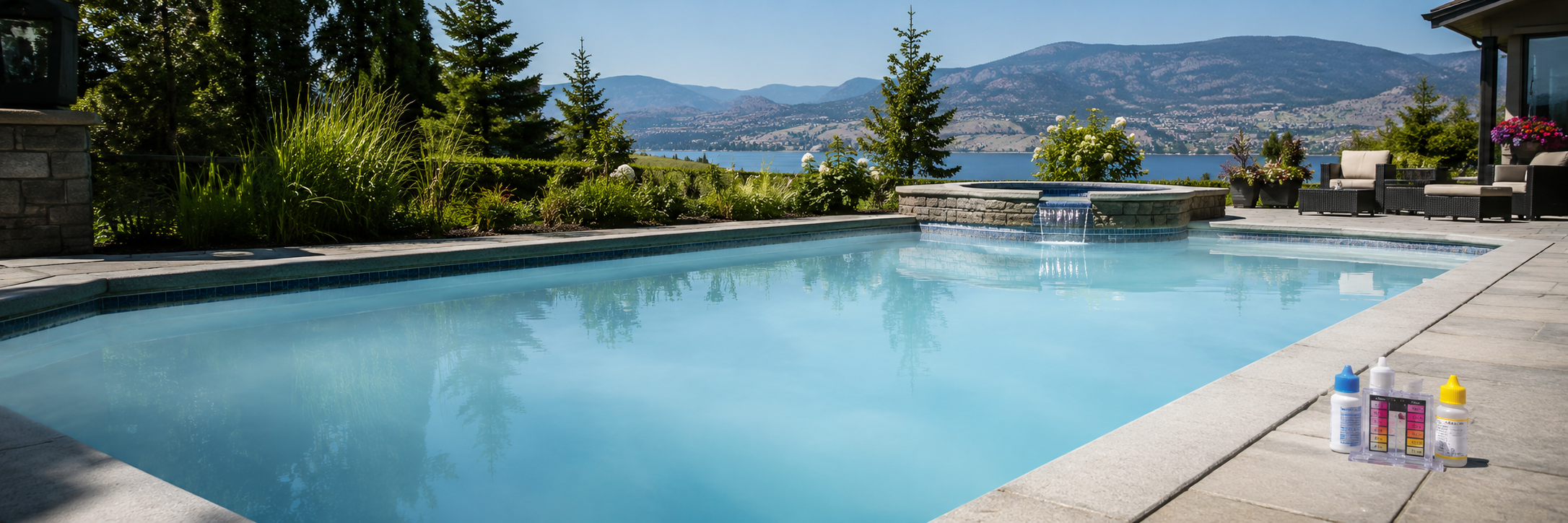
Cloudy pool water can be frustrating, especially when your chlorine level appears normal. In many cases, the real cause is related to pH, alkalinity, calcium hardness, filtration, circulation or early algae growth. Before adding more chemicals, it is important to look at the complete water balance and identify what is actually causing the problem.
|
Why Okanagan & Alberta Waters Go Cloudy (Even with Good Chlorine):
-
Calgary & Area: High regional calcium levels cause mineral clouding when pH spikes above 7.6.
-
Kelowna & Okanagan: Intense summer heat converts free chlorine to inactive combined chloramines, while summer smoke/ash loads down filtration systems.
A clear chlorine reading is useful, but it tells only part of the story. Pool water can become hazy or milky even when a test strip shows chlorine in the expected range. The problem may involve water chemistry, the filter, circulation, suspended debris or a developing algae issue that is not yet obvious.
When the cause is unclear, a complete water analysis is more useful than adding another dose of chlorine. Trevi Pools & Spas Kelowna offers free pool and spa water testing in Kelowna to help identify which levels need attention and what steps to take next.
Can Pool Water Be Cloudy When Chlorine Is Normal?
Yes. Chlorine is only one part of healthy pool water. Cloudiness may develop when the pH, total alkalinity, calcium hardness or stabilizer level is outside the appropriate range. It can also occur when the filter is dirty, the pump is not circulating the water effectively or very fine particles remain suspended in the pool.
A chlorine result may also be misunderstood. Total chlorine and free chlorine are not the same measurement. Free chlorine is the portion available to sanitize the water, while total chlorine includes both free chlorine and chlorine that has already reacted with contaminants. A seemingly acceptable total chlorine reading does not always mean the water is being sanitized effectively.
What Does “Normal Chlorine” Actually Mean?
The appropriate chlorine level depends on the pool, the stabilizer level, the water temperature, swimmer use and the products or equipment being used. This is why one number should not be evaluated in isolation.
Free chlorine: the active chlorine available to sanitize the water.
Combined chlorine: chlorine that has reacted with contaminants. Elevated combined chlorine may be associated with odours, irritation and reduced water quality.
Total chlorine: the combined measurement of free and combined chlorine.
Cyanuric acid or stabilizer: helps protect chlorine from sunlight, but an unsuitable level can make chlorine management more difficult.
A complete test helps show whether chlorine is truly available and effective, rather than simply present in the water.
Common Causes of Cloudy Pool Water
The pH Is Too High
When pH rises too high, chlorine may become less effective. High pH can also encourage calcium to come out of solution, contributing to a hazy or milky appearance. Correcting pH without checking alkalinity can lead to repeated fluctuations, so both values should be reviewed together.
Total Alkalinity Is Out of Range
Total alkalinity helps buffer the pH. When it is too low, pH can change rapidly. When it is too high, the pH may be difficult to lower and the water may become more prone to cloudiness or scale. A stable alkalinity level makes the rest of the water easier to balance.
Calcium Hardness Is Too High
High calcium hardness can contribute to cloudy water and scale, particularly when the pH and alkalinity are also elevated. Evaporation during hot Okanagan weather can concentrate minerals over time, making regular testing especially useful.
The Filter Is Dirty or Not Running Long Enough
Even perfectly balanced water may remain cloudy if the filtration system cannot remove suspended particles. A dirty cartridge, filter media problem, high filter pressure or inadequate pump run time can all reduce clarity. Check baskets, filter pressure and the manufacturer’s maintenance recommendations.
Circulation Is Poor
Water needs to move throughout the entire pool. Blocked skimmers, clogged baskets, weak flow or poorly positioned return jets can create areas where debris and contaminants collect. Improving circulation may help the filter capture particles more effectively.
Fine Debris Is Suspended in the Water
Dust, pollen, soil, sunscreen, body oils and other fine particles can remain suspended even when larger debris has been removed. Kelowna wind, dry summer conditions and wildfire smoke or ash may also introduce material that affects water clarity.
Early Algae Growth Is Beginning
Algae does not always begin as bright green water. The first sign may be dull, hazy water or slippery surfaces. A normal-looking chlorine reading does not automatically rule out algae, particularly if circulation is poor or sanitizer demand has increased.
Too Many Products Were Added at Once
Adding several chemicals close together, using the wrong order or treating the pool without knowing its current balance can create temporary cloudiness and make troubleshooting more difficult. Always follow product instructions and allow adequate circulation between treatments.
The Test Result Is Incomplete or Inaccurate
Old test strips, poor storage, an improperly collected sample or testing immediately after adding chemicals can produce misleading readings. A professional in-store test can provide a broader picture when home results do not match what you see in the pool.
Why Kelowna Summer Conditions Can Make Pool Water Cloudy
Hot, sunny weather can change pool chemistry quickly. Strong sunlight may increase chlorine loss, while warm water and frequent swimming increase sanitizer demand. Sunscreen, lotions and organic material also enter the water during busy pool days.
Dry Okanagan conditions can add dust and pollen to the pool, and evaporation can concentrate calcium and other dissolved material. Topping up the pool changes the water balance again. After a heat wave, windstorm, heavy pool party or significant water addition, it is wise to check more than chlorine alone.
What Should You Check Before Adding More Chlorine?
Before treating cloudy water, look at the complete pool system and water profile:
Free chlorine and total chlorine
- pH
- Total alkalinity
- Calcium hardness
- Cyanuric acid or stabilizer
- Filter pressure and condition
- Pump run time and water flow
- Skimmer and pump baskets
- Return-jet direction
- Visible algae, residue or debris
- Chemicals recently added to the pool
| Important: More chlorine is not always the correct answer. Adding products before identifying the cause can waste chemicals and may make the water more difficult to balance. |
How to Clear Cloudy Pool Water
Test the complete water balance. Check more than chlorine. A full analysis can identify pH, alkalinity, hardness, stabilizer and other factors that may be contributing to the problem.
Correct the water chemistry in the proper order. The right sequence depends on the test results. Avoid universal dosages because pool volume, water condition and product strength vary.
Clean and inspect the filter. Clean or backwash the filter as appropriate, empty baskets and compare the pressure reading with the normal clean-filter pressure for your system.
Improve circulation. Confirm that water is moving throughout the pool and adjust return jets if necessary. Run the pump long enough for the filter to process the water effectively.
Brush and vacuum the pool. Brushing helps loosen fine debris and early algae so the circulation and filtration system can remove it. Vacuum settled material as needed.
Retest before adding more products. After making corrections and allowing the water to circulate, test again. Retesting shows whether the treatment worked and reduces the chance of overcorrecting.
When Should You Bring in a Water Sample?
- Bring in a fresh pool water sample when:
- The pool remains cloudy after normal filtration
- The chlorine appears normal but clarity is not improving
- The water became cloudy after chemicals were added
- Cloudiness repeatedly returns
- The pool has a strong chlorine-like odour
- Swimmers experience eye or skin irritation
- The filter appears to be operating but the water is still hazy
You are unsure whether the cause is chemistry, filtration or circulation
Trevi Pools & Spas Kelowna uses the professional WaterLink Spin Touch system to test important pool and spa water levels. The team can explain the results, help identify likely causes and provide clear instructions on treatment order and retesting. Learn more about in-store pool and spa water testing.
How to Collect a Pool Water Sample
Use a clean bottle or water-sample container. Collect the water from approximately elbow depth and avoid taking the sample directly beside a return jet, skimmer, pool step or area where chemicals were recently added. Bring the sample to the store as soon as reasonably possible and let the team know which products you recently used and when they were added.
Need a Precise Water Audit? Don’t guess with test strips. Bring a 500ml water sample to Trevi Kelowna or our brand-new Trevi Calgary Showroom for a free computerized water lab test and custom chemical balance plan!
