
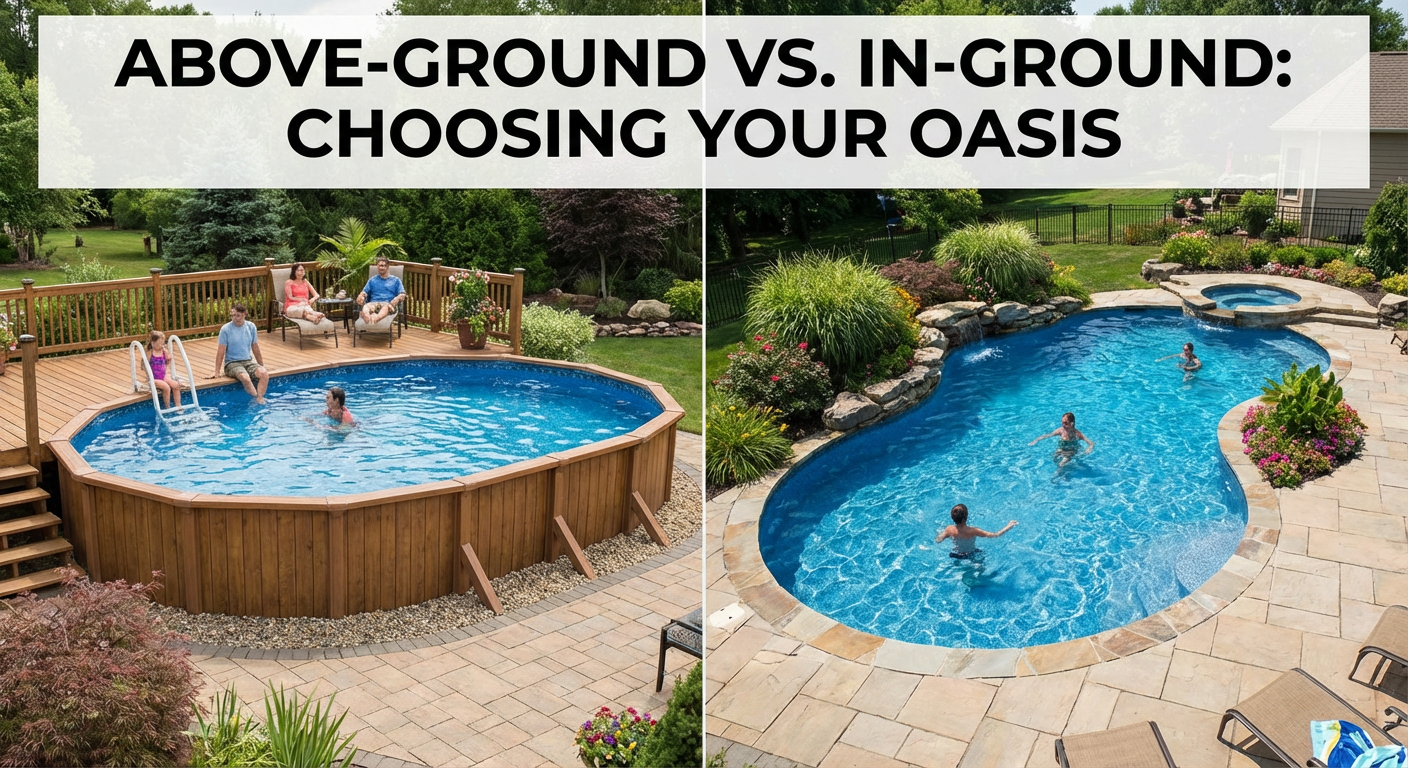
Comparison of Above-Ground vs. In-Ground Pools
Choosing between an above-ground and an in-ground pool is one of the biggest decisions you’ll make for your backyard. Both options have their strengths and trade-offs, and the right choice depends on your budget, your property, and how you plan to use your pool. This list breaks down eight important factors to consider, from upfront costs to long-term maintenance, so you can make an informed decision that fits your lifestyle.
Trevi Pools and Spas Offers Expert Guidance for Both Pool Types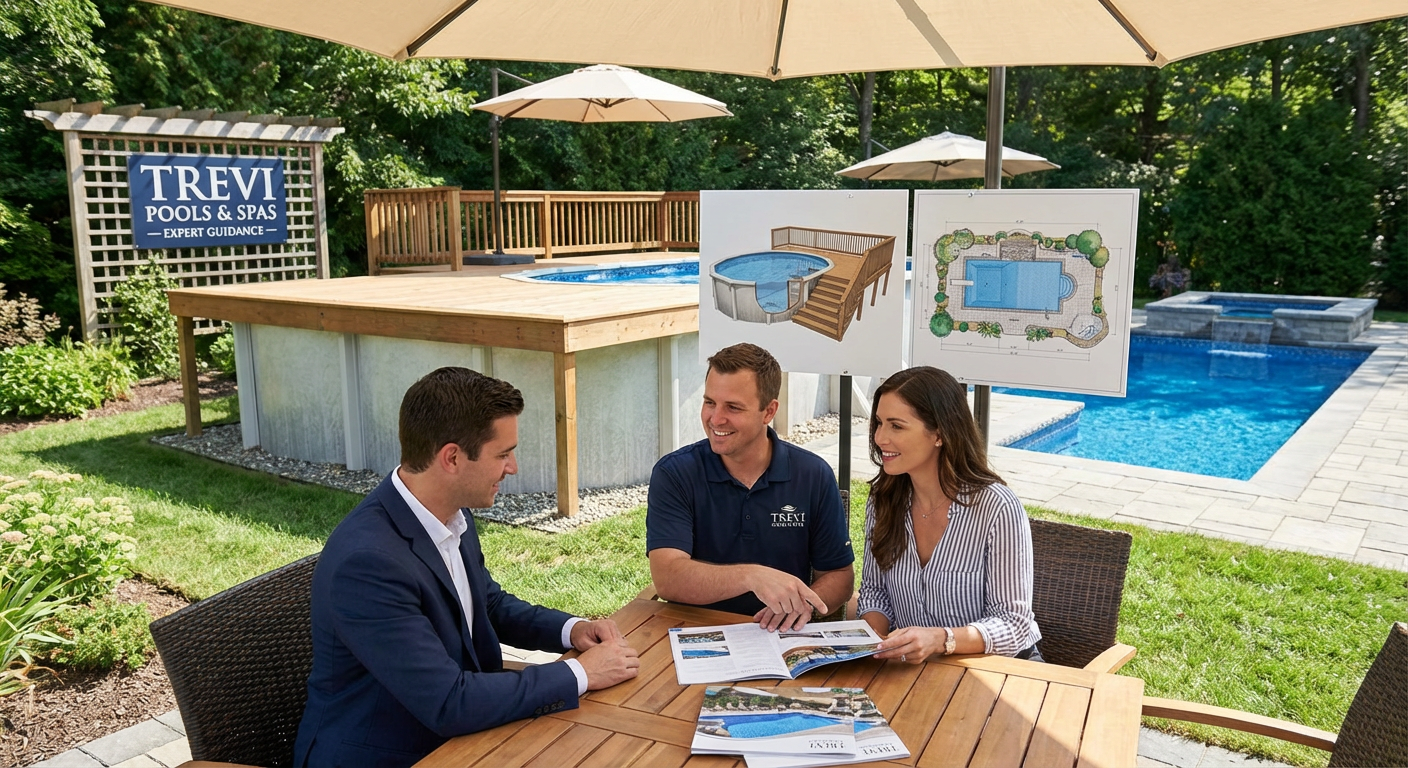 Trevi Pools and Spas Offers Expert Guidance for Both Pool Types” />
-
- If you’re starting your pool search and feel overwhelmed by the options,
Trevi Pools and Spas
-
- can help simplify the process. With locations across Canada, Trevi specializes in both above-ground and in-ground pools, offering a wide range of models, materials, and customization options to fit different budgets and backyards. Their team provides consultations to help you understand what works best for your space, climate, and family needs.Trevi also handles installation, water care products, and ongoing maintenance support, which means you have a single trusted resource from planning through to years of pool ownership. Whether you’re leaning toward a quick-install above-ground model or a custom in-ground design, their showrooms let you see and compare options in person. This hands-on approach makes it easier to visualize what will work in your yard and how each type of pool will fit into your daily life.
Upfront Cost Differences Are Significant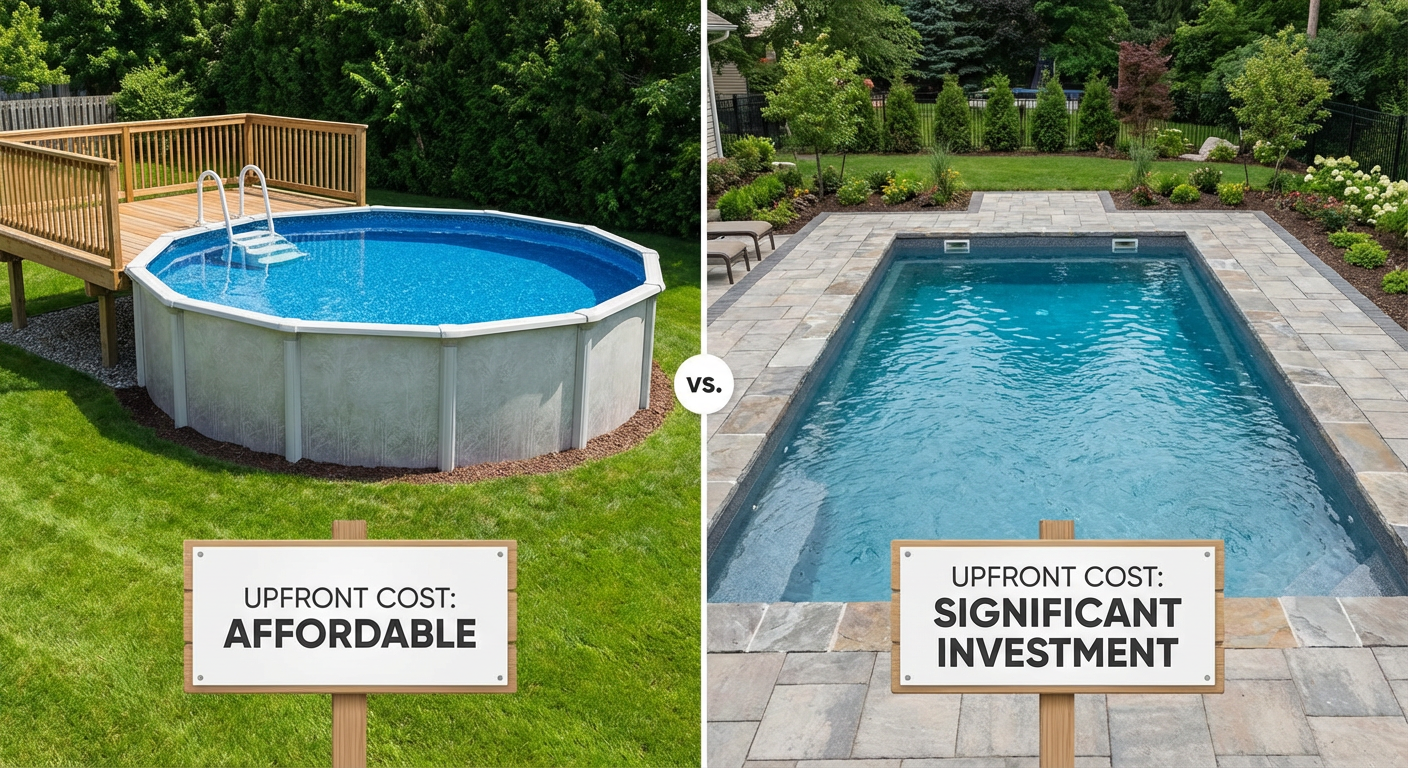
- Above-ground pools are far less expensive to buy and install than in-ground pools. A quality above-ground pool typically costs between $1,500 and $5,000, depending on size and materials. Installation is straightforward and can often be completed in a day or two, which keeps labor costs low.In-ground pools, by contrast, start around $20,000 and can easily climb to $50,000 or more for larger or more elaborate designs. Excavation, plumbing, electrical work, and finishing materials all add to the price. If you’re working with a tight budget or want to test out pool ownership before committing to a major investment, an above-ground pool offers a practical entry point. However, if you’re planning to stay in your home long-term and want a pool that feels like a permanent part of your property, the higher upfront cost of an in-ground pool may be worth it.
- Installation Time and Complexity Vary Widely
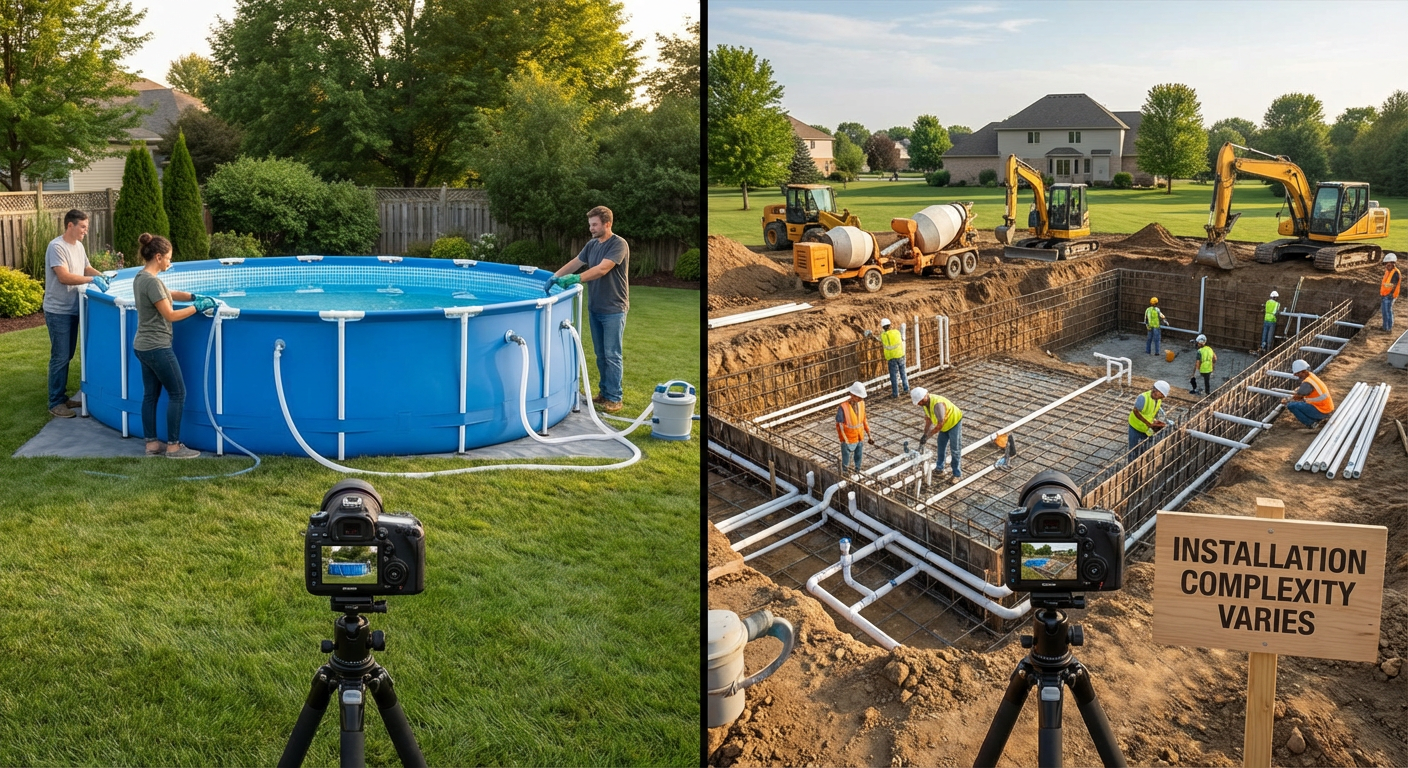
Above ground pools are known for theirspeed and simplicity. Most models can be set up in one to three days, depending on the size and whether you hire professionals or do it yourself. The process involves leveling the ground, assembling the frame, installing the liner, and filling the pool. No heavy machinery or permits are usually required, which keeps things moving quickly.In-ground pools are a different story. Installation can take several weeks or even months, especially if you’re adding custom features like waterfalls, lighting, or a spa. The process includes excavation, laying plumbing and electrical lines, building the pool shell, and finishing with tile, coping, and decking. Weather delays and permit approvals can extend the timeline. If you’re hoping to have a pool ready for summer, you’ll need to start planning an in-ground installation well in advance. Above-ground pools, on the other hand, can be up and running in time for the weekend. - Durability and Lifespan Favor In-Ground Pools
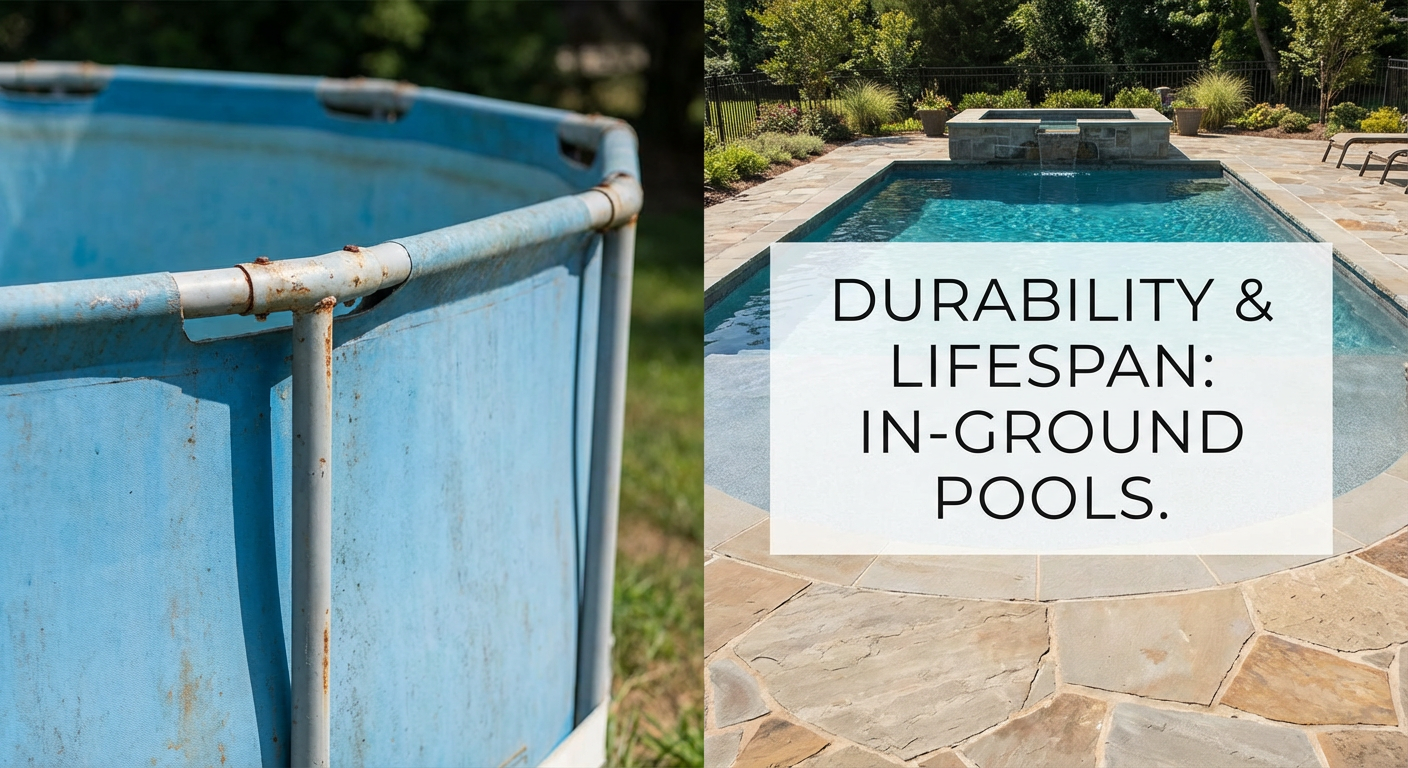 In-ground pools are built to last. A well-maintained concrete or fiberglass in-ground pool can serve your family for 25 years or more, and with proper care, some last even longer. The materials are sturdy, the structure is permanent, and the installation is designed to withstand the elements and heavy use.Above-ground pools have a shorter lifespan, typically between 7 and 15 years, depending on the quality of the materials and how well you maintain them. The walls, liner, and frame are exposed to sun, rain, and temperature changes, which can cause wear over time. Liners may need replacement every 5 to 9 years, and metal frames can rust if not properly cared for. While above-ground pools won’t last as long, their lower cost means you can replace them without a huge financial hit. If you’re looking for a pool that will outlast your kids’ childhood and still be there for your grandkids, in-ground is the way to go.
 - Maintenance Requirements Are Comparable, With Small Differences
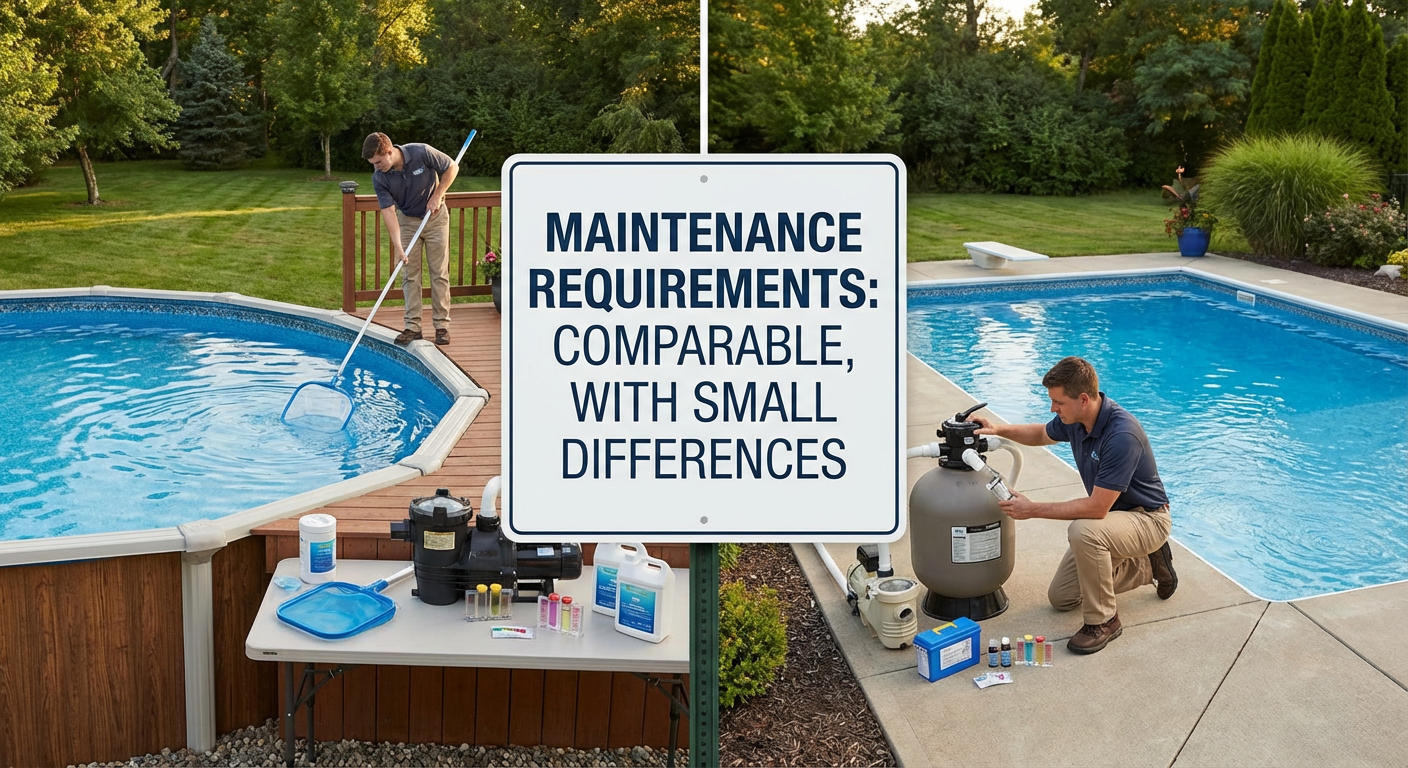 Both above-ground and in-ground pools require regular maintenance to stay clean and safe. You’ll need to test and balance the water chemistry, skim debris, vacuum the pool floor, and clean or backwash the filter. The basic tasks are the same regardless of which type you own.That said, above-ground pools can be slightly easier to manage in some ways. Their smaller size means less water to treat and fewer chemicals to buy. Covers are easier to put on and take off, which helps keep debris out and reduces cleaning time. On the other hand, above-ground pools can be more vulnerable to algae growth if water circulation isn’t strong, and their smaller filters may need more frequent cleaning.In-ground pools often have more advanced filtration and circulation systems, which can make water care more efficient. However, their larger volume means more chemicals and more time spent on upkeep. If you add features like a heater, lighting, or an automatic cleaner, you’ll have more equipment to maintain. Both types are manageable with a routine, but in-ground pools generally require a bit more time and expense to keep in top shape.
 - Property Value Impact Differs Between the TwoIn-ground pools can add value to your home, especially in warmer climates or neighborhoods where pools are common and desirable. A well-designed in-ground pool with quality landscaping and decking can make your property more attractive to buyers and may increase your home’s resale price. However, this isn’t guaranteed. Some buyers see pools as a liability due to maintenance costs and safety concerns, so the value boost depends on your market.Above-ground pools typically do not add value to your home. In fact, some real estate agents suggest removing them before listing, as they can be seen as temporary structures that detract from the yard’s appearance. Buyers often view above-ground pools as something they’ll need to dismantle and dispose of, which can be a hassle.If you’re thinking about resale value, an in-ground pool is the better investment. But if you’re planning to enjoy your pool for years without worrying about what future buyers might think, an above-ground pool offers plenty of fun without the financial commitment.
- Aesthetic Appeal and Customization Options Are Stronger With In-Ground Pools
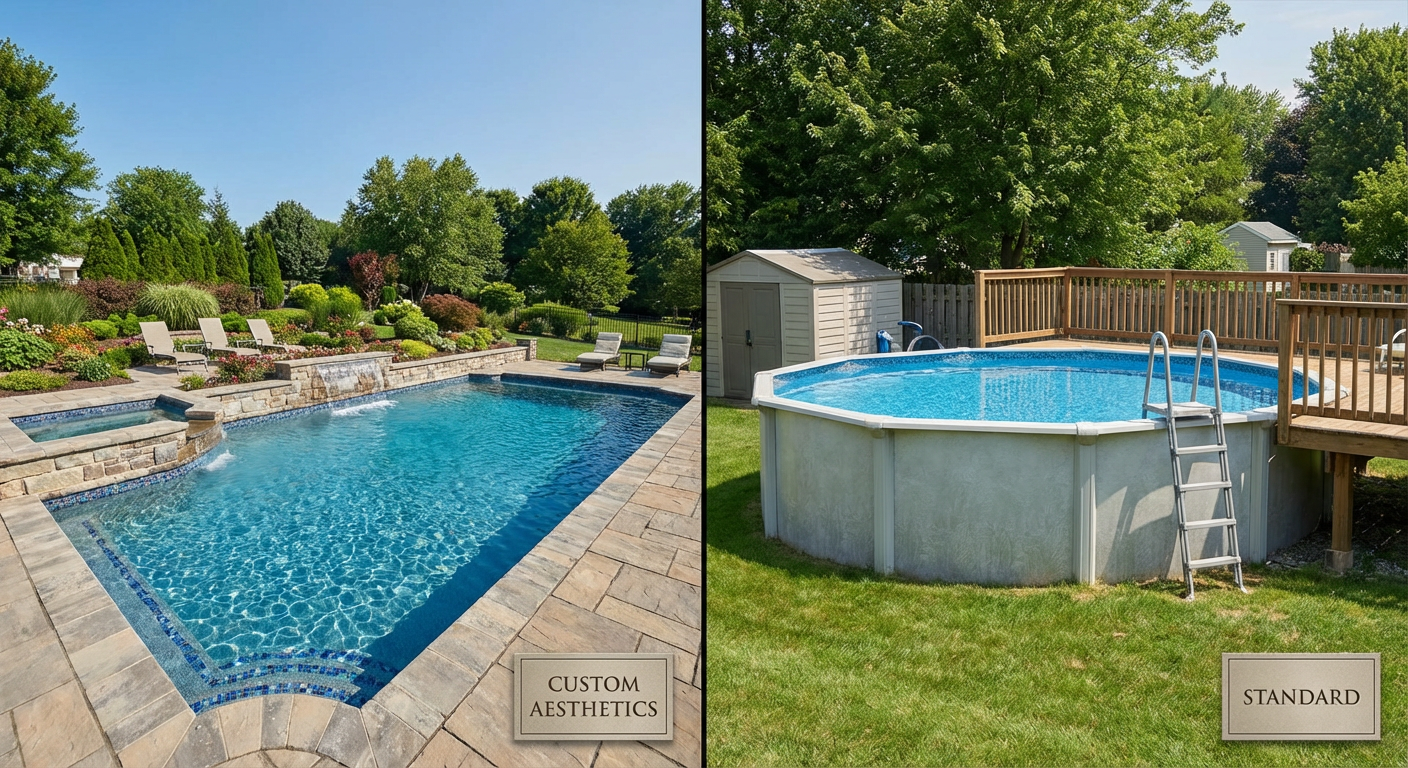 In-ground pools offer far more design flexibility. You can choose from a variety of shapes, sizes, and finishes, and you can integrate the pool into your landscaping with decking, stonework, plants, and lighting. Features like infinity edges, beach entries, and built-in spas are all possible with in-ground designs. The result is a cohesive, polished look that feels like a natural extension of your outdoor living space.Above-ground pools are more limited in appearance. They sit above the yard, which can make them feel less integrated into the landscape. While you can improve the look with decking, skirting, or surrounding plants, the pool itself will always be a visible structure. Some homeowners embrace this and create attractive setups with multi-level decks and privacy screens, but it takes extra effort.If aesthetics are a priority and you want a pool that looks like it belongs in a magazine, in-ground is the clear winner. If you’re more focused on function and affordability, and you’re okay with a more utilitarian appearance, an above-ground pool will serve you just fine.
 - Safety Considerations Differ for Families With Young Children
 Above-ground pools have a built-in safety advantage: their height. Most models have walls that are four to five feet tall, which makes it harder for young children to climb in without supervision. You can add a lockable ladder that you remove when the pool isn’t in use, creating an additional barrier. This design gives parents some peace of mind, though supervision is still essential.In-ground pools are at ground level, which means easier access for everyone, including small children and pets. This makes fencing a must. Most municipalities require a fence around in-ground pools, with self-closing gates and locks, to meet safety codes. You may also want to invest in pool alarms, safety covers, or motion sensors. These measures add to the cost and complexity, but they’re necessary to protect your family and comply with local regulations.Both pool types require vigilance and safety equipment, but above-ground pools offer a natural barrier that can reduce risk. In-ground pools require more proactive safety planning, but with the right precautions, they can be just as safe.
 - Climate and Seasonal Use Affect Your ChoiceIf you live in a region with harsh winters, above-ground pools are easier to winterize and protect. You can drain them partially, cover them securely, and leave them in place, or in some cases, disassemble them for storage. The smaller size and simpler plumbing mean less risk of freeze damage.In-ground pools are more challenging in cold climates. You’ll need to blow out the plumbing lines, lower the water level, add winterizing chemicals, and cover the pool properly to prevent damage from ice and snow. If you live somewhere with a short swimming season, the effort and cost of maintaining an in-ground pool year-round may not feel worth it.On the other hand, if you live in a warm climate where you can swim most of the year, an in-ground pool makes more sense. You’ll get more use out of it, and the investment feels more justified. Above-ground pools work in warm climates too, but they can feel less substantial if you’re using them constantly. Think about how many months you’ll realistically use your pool, and let that guide your decision.
Choosing between an above-ground and an in-ground pool comes down to your budget, your timeline, and how you envision using your backyard. Above-ground pools offer affordability, quick installation, and easier winterization, making them ideal for families who want to dip their toes into pool ownership without a major commitment. In-ground pools require more investment and planning, but they deliver long-term value, better aesthetics, and a permanent addition to your property. Whichever route you choose, the most important thing is that it fits your lifestyle and brings you years of enjoyment.
